Skip to content

Free Shipping On All Orders

Expert Care Guide with Every Plant

7-Day Undamaged Plant Guarantee

Syngonium Strawberry

Tap any badge to learn more

About

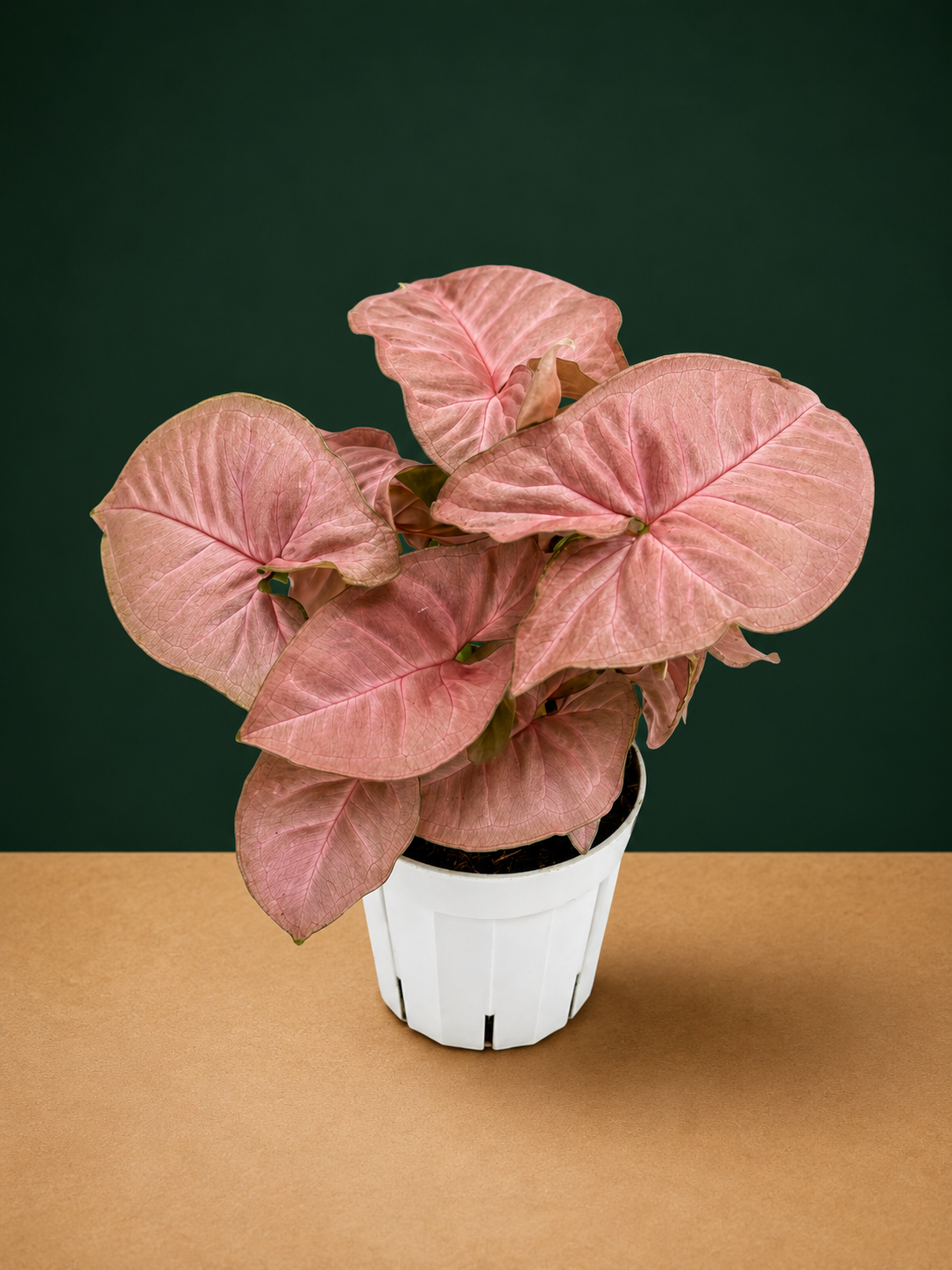
Syngonium Strawberry Live Plant

Bring a stunning splash of soft pastel color into your home with the Syngonium Strawberry. This gorgeous cultivar boasts arrow-shaped leaves painted in a beautiful blend of soft sage green and dusty strawberry-pink. A highly versatile grower, it can be pruned regularly to maintain a compact, bushy tabletop shape, allowed to trail gracefully from a hanging basket, or trained to climb up a moss pole to encourage larger, mature leaf development. It is exceptionally easy to care for and propagates readily.

Other Common Names

Strawberry Cream Arrowhead Vine
Goosefoot Vine
Syngonium podophyllum 'Strawberry Cream'
Pink Arrowhead Plant

Care Details

Light

Bright, indirect light is ideal for maintaining the Syngonium Strawberry's stunning pink coloration. If kept in too much shade, the new leaves will emerge mostly green and lose their pink hue. Keep the plant away from hot, direct afternoon sun, which will quickly bleach and dry out the foliage.

Water

Water whenever the top 1–2 inches of soil have fully dried out. Unlike Alocasias, which prefer more consistent moisture, Syngoniums appreciate a brief drying-out period but should not be left dry for long. Pour water evenly until it drains out the bottom, and never let the pot sit in standing water.

Humidity & Temperature

While standard Syngoniums survive in average home humidity (around 40%+), maintaining a level of 50–70% is ideal for rare variegated variants. Keep temperatures warm, between 65–85°F (18–30°C), and guard against severe cold drafts, air conditioners, or sudden drops below 55°F (13°C).

Soil & Fertilizing

Plant in a highly aerated, well-draining substrate. Incorporating orchid bark and perlite into a standard potting base is highly recommended to ensure adequate airflow around the roots. Apply a balanced liquid formulation monthly during the spring and summer active growth windows.

Propagation

Incredibly simple to propagate! Take a stem cutting just below a node (where a leaf joins the stem) and place it in a jar of water or damp sphagnum moss. Once roots reach a couple of inches long, transplant the cutting into a chunky soil mix.

Re-potting

As a vigorous grower, this plant generally needs repotting every 1–2 years. If you notice roots circling the bottom or poking through the drainage holes, transition the plant to a container 1–2 inches larger in diameter with plenty of drainage.

Avoid Pets

Pet Safety

Syngoniums contain insoluble calcium oxalate crystals, which are toxic to dogs, cats, and other pets. If chewed, they cause immediate oral irritation, drooling, swelling, and vomiting. Keep this trailing plant placed safely on high shelves or in hanging planters.

Native Region

The parent species Syngonium podophyllum is native to tropical rainforest regions stretching from Mexico, through Central America, and into South America.

Fun Fact

Syngonium leaves undergo a striking transformation as they mature. Juvenile leaves are simple and arrowhead-shaped, but as the vine climbs and ages, the leaves split into multi-lobed structures that look like an entirely different plant!

Common Problems

Warning

Variegation Fading to Green

Cause: Low light levels

If the new leaves are opening up mostly green instead of pink, your plant is not receiving enough light. Move it to a brighter spot with plenty of filtered, indirect light to encourage the colorful variegation to return.

Danger

Yellow Leaves and Soft Stems

Cause: Overwatering or poor drainage

Consistently yellowing leaves and mushy stems are classic signs of overwatering. Ensure you let the top 1–2 inches of soil dry out between waterings and verify that your potting soil drains quickly.

Warning

Dry, Crispy Leaf Margins

Cause: Low humidity or dry air

Dry, brown, or crispy leaf edges usually indicate the surrounding humidity is too low. Elevate the moisture levels by grouping plants together, running a humidifier, or sitting the pot on a tray of wet pebbles.

Info

Leggy Growth with Tiny Leaves

Cause: Reaching for light or lack of support

Long, spindly stems with large gaps between leaves mean your Syngonium is searching for light. Provide brighter indirect light, pinch back leggy vines to promote bushier growth, or offer a moss pole for climbing support.

Quick Tips

Things to know

01

Keep your Syngonium Strawberry in a bright, indirect light location to maintain its signature pastel pink leaves.

02

Wipe the leaves with a damp microfiber cloth regularly to remove dust and inspect the undersides for common pests.

03

Add a generous amount of perlite and orchid bark to your potting mix to ensure excellent drainage and prevent root rot.

04

Prune or pinch back the growing tips of the vines if you prefer a compact, bushy tabletop shape rather than a trailing vine.

05

Always empty the drip tray after watering to ensure the roots never sit in stagnant, oversaturated water.

06

Provide a moss pole or trellis to train your Syngonium to climb, which encourages the plant to produce larger, mature foliage.


Easy Care, Colorful Foliage, Trailing Plant, Climbing Plant, Fast Growing, Low Maintenance