Skip to content

Free Shipping On All Orders

Expert Care Guide with Every Plant

7-Day Undamaged Plant Guarantee

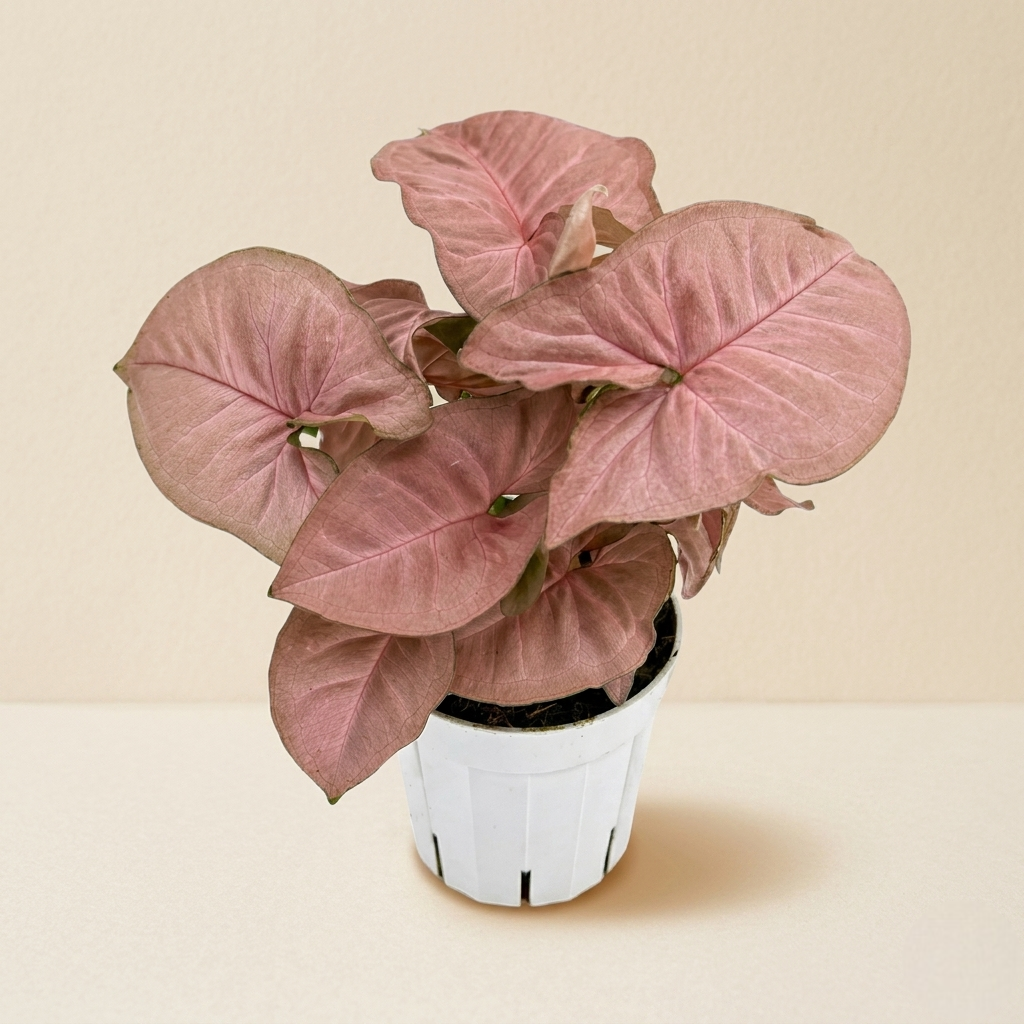
Rare Alocasia Polly Pink Variegated

Tap any badge to learn more

About

Rare Alocasia Polly Pink Variegated

The Rare Alocasia Polly Pink Variegated Tissue Culture Starter Plant is an extraordinary mutation of the classic African Mask plant that has taken the rare plant community by storm. Derived through precision micro-propagation, this striking juvenile plant develops iconic arrow-shaped leaves boasting high-contrast variegation in hues of cream, pastel pink, and deep emerald green. Unlike standard varieties, its dramatic white skeletal veins are complemented by soft pink tones blushing through the variegated sectors and down the petioles. Because it originates from a completely sterile laboratory environment, the young starter seedling possesses exceptionally delicate cell walls that require dedicated hardening to thrive in home conditions. As it matures, the leaves grow progressively larger and more textured, creating a spectacular architectural silhouette that serves as a living centerpiece. Guiding this delicate micro-seedling through its early growth stages presents a highly rewarding challenge for serious indoor gardeners looking to add a true jewel to their collection.

Other Common Names

Pink Variegated Polly
Variegated Elephant Ear Starter
Pink Alocasia Amazonica
Pink Variegated African Mask Plant

Care Details

Light

This highly variegated jewel requires a large volume of bright, filtered indirect light to protect its sensitive pink and cream patches. The absolute best layout involves positioning the starter cup about twelve to eighteen inches directly beneath a professional full-spectrum LED grow light set for twelve hours daily. Avoid placing this fragile tissue culture plant in any direct sunbeams because the unhardened, non-chlorophyll tissue will burn and melt rapidly. Conversely, if the ambient light levels are kept too dim, the plant will stop growing new leaves and may eventually drop its vibrant pink variegation entirely. An east- or sheltered south-facing windowsill protected by a clean, sheer window film provides an excellent natural light profile.

Water

Watering an Alocasia tissue culture seedling requires immense precision to protect the tiny, unhardened root network from rotting. The propagation medium must remain consistently moist, feeling like a thoroughly wrung-out sponge, rather than drying out completely like a mature plant would. Lightly apply room-temperature distilled water or filtered rainwater every three to four days depending on your setup's internal airflow. Never use hard municipal tap water because the built-up mineral salts and chemical additives will quickly scorch the delicate micro-roots and turn the leaf tips crispy. Always verify that your starter container allows excess liquid to drain away instantly so that the substrate never becomes muddy or waterlogged.

Humidity & Temperature

This tropical native demands an enclosed environment maintaining a strict humidity level between 75% and 85% during its critical acclimation weeks. Keep the tiny seedling sealed tightly inside a clear propagation dome or a specialized glass terrarium to maintain this moist air buffer. Ensure the ambient room temperature stays steadily between 72 and 82 degrees Fahrenheit (22 to 28 degrees Celsius) to fuel healthy cell division. Protect the unhardened starter plant from sudden temperature fluctuations caused by cooling fans, air conditioning vents, or cold window glass. Exposure to temperatures dropping below 65 degrees Fahrenheit (18 degrees Celsius) can shock the tiny plant, causing immediate leaf drop or forcing the central corm into premature dormancy.

Soil & Fertilizing

During this introductory phase, the small starter plant should grow exclusively in an ultra-fluffy, sterile propagation substrate rather than standard heavy soil. A premium mix consisting of sixty percent high-grade long-fiber sphagnum moss and forty percent coarse perlite ensures outstanding aeration and moisture control. Completely avoid using any commercial fertilizers during the first six weeks following its arrival from the laboratory environment. The concentrated minerals in standard plant foods will immediately chemical-burn the microscopic root systems of unhardened tissue culture plants. Once the specimen successfully establishes its third true home leaf, you can introduce a gentle, balanced liquid fertilizer diluted to one-quarter strength once per month.

Propagation

While mature Alocasias are easily propagated by harvesting small corms from the soil, this tissue culture starter is far too young for any separation. Your primary focus must remain entirely on cultivating the central root system and protecting the fragile crown from damage. Attempting to cut or split this miniature plant will split the main growth point and cause the entire seedling to collapse. Allow the plant to mature undisturbed for at least a full year until it develops a robust, thick underground corm structure. Once the plant reaches maturity and naturally produces separate baby offsets around its base, you can safely separate them during a regular springtime repotting session.

Re-potting

You should only attempt to repot this high-value starter when its roots completely encircle the bottom of the original plastic container. Select a small replacement pot measuring no more than two to two and a half inches in diameter with extensive bottom drainage pathways. Gently slide the seedling out of its original plug, taking extreme care not to tear the thin, hair-like white feeder roots. Place the plant into the new pot ensuring the delicate crown sits perfectly flush with or slightly above the fresh substrate surface. Lightly press a porous mix of fine coco coir, perlite, and a dash of tree fern fiber around the roots and mist it softly to settle the medium.

Not Pet Safe

Pet Safety

This rare Alocasia variety is highly toxic to dogs, cats, and human beings if any part of the plant is consumed. The foliage and stems contain a dense concentration of needle-sharp calcium oxalate crystals that pierce soft oral tissues on contact. Ingestion will instantly cause severe burning of the mouth, constant drooling, visible swelling of the throat, and difficulty swallowing. To protect both your pets and your rare botanical investment, always keep this plant sealed securely inside a glass greenhouse cabinet or placed on a high shelf.

Native Region

The ancestral species behind this stunning hybrid are native to the warm, intensely humid understory environments of the Southeast Asian rainforests. In their natural habitats, they thrive on the dappled sunlight filtering through the dense jungle canopy and grow in rich, highly porous leaf litter. Understanding this background highlights the crucial importance of providing high atmospheric humidity and open, well-aerated soil for your starter plant.

Fun Fact

The standard Alocasia Polly is a compact, cultivated selection derived from the classic Alocasia amazonica hybrid created in the mid-twentieth century. This ultra-rare pink variegated variant occurred as a spontaneous chimeric mutation during the laboratory micro-propagation process, making each specimen's color pattern completely unique. The breathtaking pink patches are caused by a fascinating lack of green chlorophyll combined with natural anthocyanin pigments bleeding through the clear leaf layers.

Common Problems

Danger

Translucent Leaves and Soft Stems

Cause: Bacterial damping off from over-saturation

If you notice the arrow-shaped leaves of your starter plant turning see-through, mushy, or completely liquefying, it is suffering from bacterial damping off. This destructive issue occurs when the air inside your propagation dome becomes entirely stagnant and oversaturated with moisture. Fresh tissue culture cells have zero natural resistance against aggressive fungal or bacterial pathogens when trapped in closed, hot enclosures. Promptly remove the humidity lid for several hours to encourage active air exchange around the compromised foliage. Trim away any decaying leaf sections with a completely sterile razor blade and reduce your watering frequency until the media feels damp but not wet.

Warning

New Leaves Fading to Plain Green

Cause: Low light levels forcing reversion

When your rare starter plant begins unfurling new foliage that completely lacks the beautiful cream and pink variegation, it is undergoing reversion. This survival mechanism is triggered when the plant is not receiving enough ambient light energy to support its delicate, non-photosynthetic tissue. To compensate for the low energy, the plant produces extra green chlorophyll pigments to maximize food production. Immediately relocate your starter plant to a significantly brighter room or lower your adjustable grow light closer to the leaves. Provide a consistent twelve to fourteen hours of bright, indirect illumination to stimulate the marbled pink genetics on future leaves.

Danger

Leaf Drop and Corm Softness

Cause: Fungal root rot from waterlogged medium

If the small leaves suddenly droop limply and the tiny underground corm begins feeling soft or spongy to the touch, root rot has set in. This fatal condition is caused by leaving the propagation moss completely saturated, which cuts off all oxygen to the micro-root system. Deprived of oxygen, the delicate roots suffocate and rot away, rendering the plant incapable of drawing up hydration. Carefully extract the seedling from the moss and cut away all dark, mushy roots using a blade dipped in rubbing alcohol. Dust the remaining healthy corm tissue with a small pinch of organic sulfur powder and repot into an ultra-chunky mix of perlite and clean moss.

Info

Brittle Bleached Leaf Margins

Cause: Light burn from close grow lights

If the striking pink and green leaves begin developing dry, paper-thin white or tan patches specifically on the upper surfaces, they are experiencing light burn. This visual bleaching occurs when the starter plant is positioned too close to an artificial grow light or exposed to direct sunlight. The delicate variegated sectors have no protective pigments and are highly susceptible to ultraviolet and thermal damage. Move your LED grow fixture several inches higher above the plant canopy or pull the propagation tray further away from the window. Trim the entirely dead leaves only after the plant has stabilized and produced new, healthy growth.

Quick Tips

Things to know

01

Avoid using standard commercial leaf shine chemicals on this delicate tissue culture seedling because they will instantly clog the pores.

02

Keep a magnifying glass nearby to regularly check the undersides of the small arrow leaves for microscopic spider mites.

03

Always use room-temperature distilled fluids to prevent shocking the sensitive tropical root system during routine waterings.

04

Wipe down any heavy water condensation pooling on the inner walls of your acclimation chamber daily to prevent mold growth.

05

Rest your propagation tray on a specialized seedling heat mat set to a stable 75 degrees Fahrenheit to accelerate early root development.

06

Avoid touching or handling the new pink leaves unnecessarily because the natural oils on your skin can bruise the young cells.


alocasia polly, pink variegated alocasia, tissue culture starter, rare elephant ears, collector plants